Search & Match can provide an earlier relevancy score, and automations can invite or follow up with candidates. The 0–100 Screen score and summary are generated after completed chat or voice screening; incomplete screenings do not receive them.
Scout for EpiqA more trusted, faster recruiting workflow.
The new hiring question
When every candidate looks perfect, who are you actually hiring?
AI can help applicants tailor a résumé and prepare stronger answers. That is not fraud—but it makes polished content less useful as proof of authenticity.
“Does the content fit?”
To“Can I trust who produced it?”
applicants*
of surveyed candidates used AI during the application process.
Gartner, 2025*Illustrative scenario—not an estimate of Epiq applicants. AI use itself is not fraud.
Answers are one layer. Evidence is the system.
Video adds context that text and voice leave out.
With text or voice alone, a recruiter cannot see whether someone is reading, receiving off-screen help, or behaving inconsistently. Structured video makes some forms of assistance harder to hide and gives the recruiter reviewable context.


TurboCheck adds a specialized identity layer.
Founded in 2023 and based in Austin, TurboCheck specializes in hiring fraud and identity verification.
TurboCheck Face ID is designed to flag deepfakes and identity switching in live or recorded interviews. Scout integration status is company-reported. Product scope
Why AI-first matters
AI-first matters when the architecture can evolve.
The advantage is not the AI label. It is an architecture that can absorb new controls without rebuilding every handoff.
“Just bolting on gen AI won’t generate real enterprise value.”McKinsey, 2026
This is an architecture principle—not a Bullhorn-specific speed benchmark.
WHAT INDEPENDENT RESEARCH SAYS
“Software engineering teams struggle to use legacy application and data architecture to deliver intelligent applications with AI agents.”
“Most organizations can’t ‘AI their way out’ of technical debt.”
G2 review themes may overlap. IsDown logged three Bullhorn ATS/CRM performance incidents in four days in July 2026. This is directional evidence about Bullhorn overall—not an Amplify-specific benchmark or proof of cause.
Candidate choice should not create a blind spot
Scout scores first—so recruiters retain a signal when video is skipped.
Some qualified candidates will not complete a non-human text, voice or video interview. Bullhorn can use Search & Match or separate automation earlier, but its primary 0–100 Screen score follows completed screening. Scout preserves its pre-interview job score for recruiter follow-up whether or not video is completed.
Inbound applicants, internal database candidates and Source Plus candidates receive a job score before video. If a high-scoring candidate declines or does not complete the interview, that original score remains visible for direct recruiter follow-up.
Willingness to complete an AI interview is not a proxy for qualification.
The pre-interview score remains available whether video is completed or not.
Recruiters can prioritize strong non-completers for personal outreach.
Video adds technical and integrity evidence to the earlier fit assessment.
Bullhorn flow is based on public documentation; Epiq’s enabled Search & Match and follow-up configuration should be confirmed. Scout timing and follow-up workflow are company-reported. Covenant currently routes scores of 7.0 or higher.
The resume is no longer proof
AI can perfect a resume. Bullhorn says its custom scoring can vary.
Bullhorn can add hiring-manager must-haves through prompt-based instructions. But its own documentation says these are general guidance—not precise formula-based weights—and their results may vary.
A polished resume can score well. The priorities meant to sharpen fit can vary.
Bullhorn shows resume, screening and combined scores, with a 50/50 default blend. It can give more consideration to hiring-manager “Must Haves,” but says the exact point-level impact cannot be verified through a transparent formula.
BULLHORN’S OWN DOCUMENTATION“Results will vary as instructions are subject to AI interpretation. We cannot predict exactly how your instructions will be applied in every case.”
Weight the real priorities once. Apply them consistently. Then require proof.
Scout captures the hiring manager’s true must-haves, assigns defined weights, and applies the same criteria repeatably before using role-specific technical video to pressure-test the candidate.
WHY THIS IS HARDER TO GAMEThe candidate can see the job description. They do not know Epiq’s internal weighting—and a polished resume is not the final proof.
Scout turns Epiq’s internal must-haves into defined, repeatable weighted criteria. Candidates must then demonstrate those highest-priority skills on video while Scout evaluates technical depth and integrity signals.
Bullhorn Amplify and Scout
Where Scout is different: four controls in one recruiting workflow.
The question is not whether both platforms use AI. It is what evidence they produce, how consistently priorities are applied and how deeply candidates are tested.
Live fraud detection + video evidence
Screen conducts chat or voice interviews. Verify is newly marketed for suspicious applications, but Epiq should confirm its exact live signals, availability and whether it produces video interview evidence.
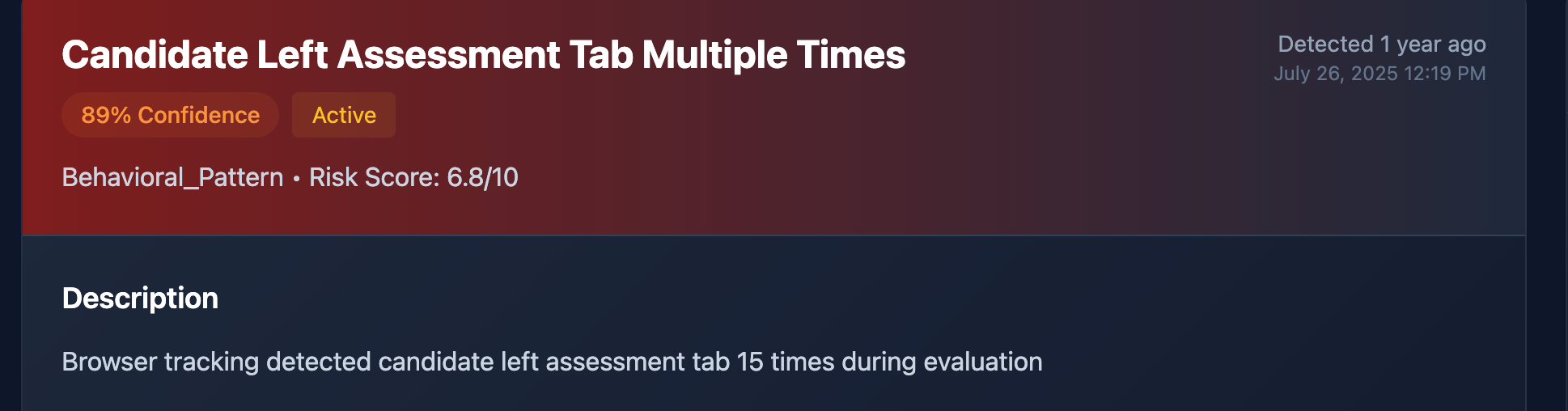
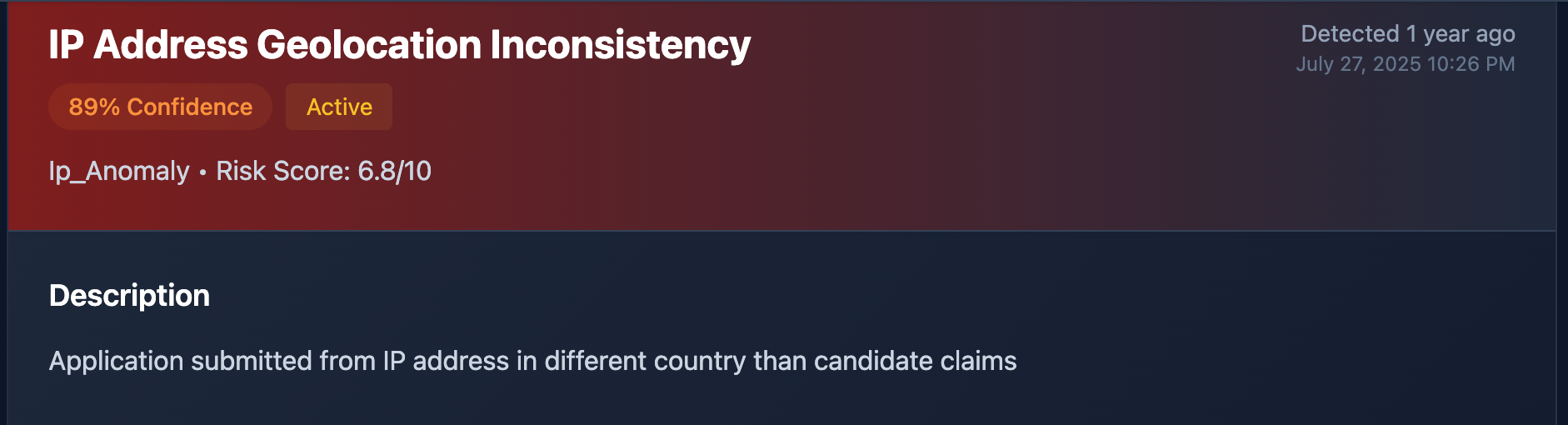
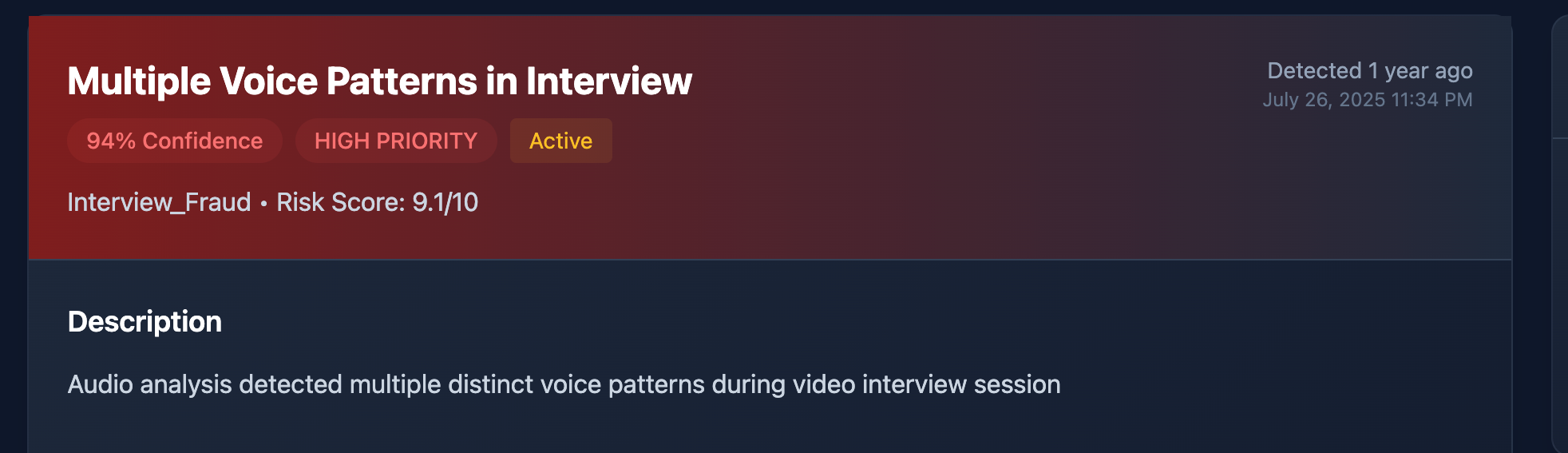
Live in Scout today: structured video interviews plus named voice, behavior, location, résumé-metadata and TurboCheck digital-ID signals. Recruiters can review the recording and the alerts together.
AI-first architecture
Amplify adds AI skills and digital workers within Bullhorn’s established ATS, CRM and automation ecosystem.
Scout was purpose-built around AI, so scoring, interviews, automation and integrity checks operate in one recruiting flow. That makes it easier to add new controls as hiring risks change.
Consistent, criteria-based scoring
Bullhorn describes its default score as consistent. Hiring-manager priorities can be added through instructions, but Bullhorn says AI interpretation may vary and their exact point impact cannot be predicted or verified.
Epiq’s must-haves become defined, weighted criteria applied the same way to every candidate. This aligns the score to what the hiring leader values; independent repeated-input testing observed stable scores and rationales.
Multi-LLM technical pressure test
Public materials describe role-specific chat or voice questions. They do not document multi-model cross-checking or structured technical validation on video.
Multiple LLMs reduce single-model dependence, cross-check evaluation for consistency and pressure-test technical claims with follow-up questions. Candidates must demonstrate their skills on structured video—not simply repeat a polished answer.
Epiq’s priorities→repeatable scoring→technical proof on video→named fraud evidence for human review
A baseline to confirm—not a correction
Epiq’s operating data implies approximately 44 days to fill.
The intake also reports 14 days. The difference may be role mix, timing definitions, or a point-in-time workload. Scout can help once both numbers refer to the same population.
Value we can model now
- Recruiter capacity
- Candidate coverage
- Stronger integrity evidence
Time-to-fill improvement
Included only after Epiq confirms the baseline and measurement definition.
$0 counted todayBullhorn integration
Estimated implementation range, subject to workflow and data discovery.
$5K–$10KMove faster without lowering the trust threshold.
Download the executive deckSources, assumptions and evidence boundaries
Epiq inputs: 14 reported days to fill, 24 active requisitions, and 200 annual hires from the ROI intake. The 43.8-day figure is implied only if the active workload is an average and both inputs cover the same population.
Scout figures: ~2.2-second score, ~5-minute path to interview, operating history, multi-LLM workflow, and illustrated signals are company-provided. They are not guarantees or proof that any individual committed misconduct.
Architecture and speed evidence: McKinsey, Gartner and Deloitte support the general value of AI-ready architecture. G2 review themes and IsDown incident history provide directional Bullhorn-wide performance evidence, not a controlled Amplify benchmark or proof that architecture caused the reported latency.
Applicant progression: Bullhorn documents separate question-generation, screening-engagement and invitation-automation components; its 0–100 Screen score and summary follow a completed screening. Search & Match can provide a separate relevancy score earlier. Scout’s 2.2-second timing, threshold automation and cross-source workflow are company-reported.
Scoring evidence: Bullhorn calls its default Screener consistent and objective, while documenting variability and limited mathematical transparency for additional scoring instructions. Audit Peak’s Scout AUP tested repeated-input consistency; it did not express an audit opinion or validate predictive accuracy or fairness.
Verify maturity: Bullhorn’s May 2026 announcement says Verify was available to Amplify customers, while its current operational KB says Verify remains under active design with definitions to be finalized closer to general availability. Epiq’s exact edition, tenant access, signal coverage, commercial terms and production readiness therefore require written confirmation.
TurboCheck: Public sources support its 2023 founding year, Austin location, and digital-ID and Face ID product scope. Scout’s current use of TurboCheck digital identity verification and its in-progress Face ID/video integration are company-reported as of August 2026; the video-identity integration is not presented as live today.
A definition question—not a data correction
The three reported numbers do not reconcile as one steady-state baseline.
Each number may be valid. The mismatch means at least one uses a different population, stage, time period or measurement definition.
200÷365=0.548hires per day
24÷0.548=43.8implied days
This is internally consistent if 24 is the average open workload and both inputs cover the same roles and period.
Before adding time-to-fill savings to Scout’s ROI, align the population, time period, and start and end points used by all three inputs.
“The operating data implies approximately 44 days, which does not reconcile with the separate 14-day metric. We would like to confirm whether they measure different populations or stages.”